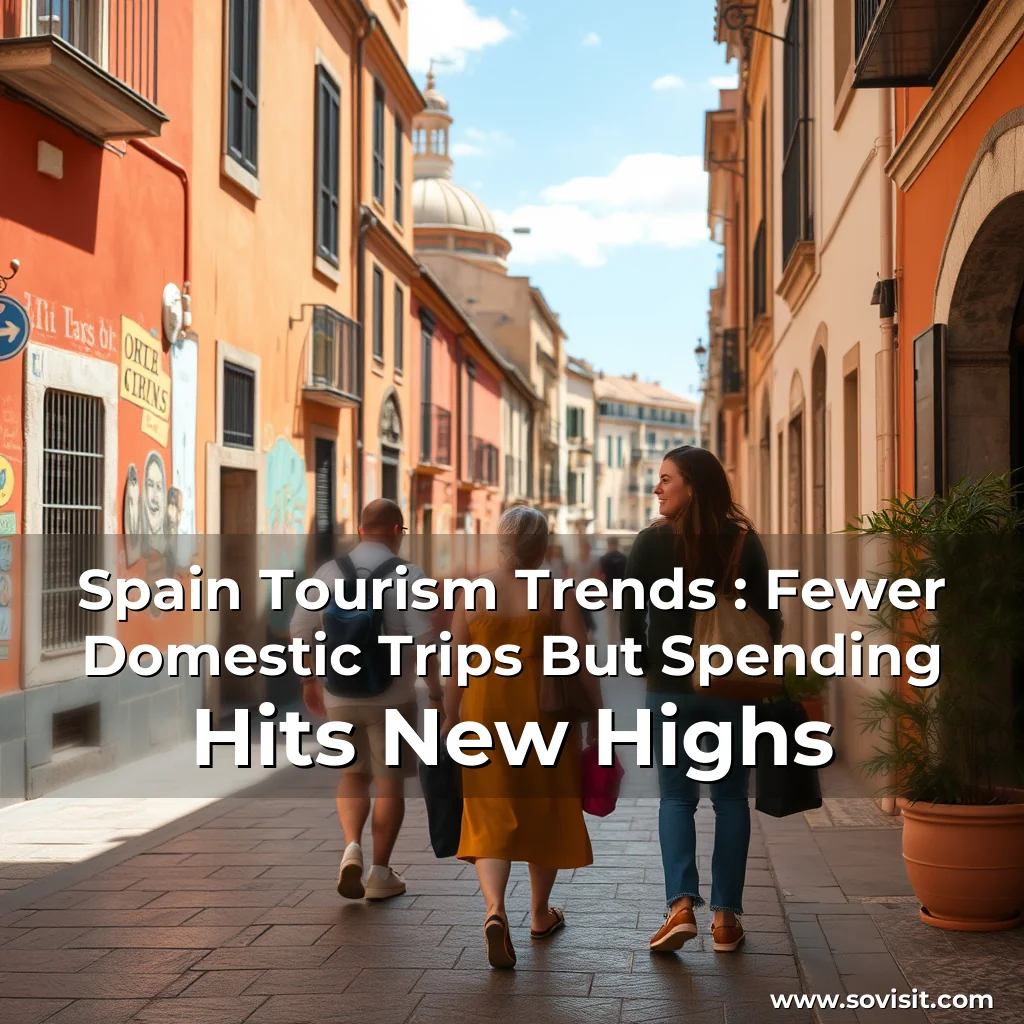
The Rise of Domestic Tourism in Spain
Domestic tourism in Spain has experienced significant growth in recent years, driven by the country’s rich cultural heritage, beautiful landscapes, and vibrant cities. The tourism industry has become an essential part of Spain’s economy, generating substantial revenue and creating jobs for millions of people.
Factors Contributing to the Growth of Domestic Tourism
Several factors have contributed to the growth of domestic tourism in Spain.
The Rise of International Travel
The number of trips abroad taken by Spaniards has been steadily increasing over the past few years. In 2024, this trend continued, with a 6.3% increase in the number of trips recorded compared to the previous year. This growth can be attributed to various factors, including improved economic conditions, increased accessibility, and a growing desire for cultural and leisure experiences. • Factors contributing to the rise of international travel include:
The Importance of Domestic Travel
Despite the growth in international travel, domestic travel remains a significant aspect of the Spanish tourism industry. In 2024, nearly 163 million trips were taken within Spain, highlighting the importance of exploring one’s own country. Domestic travel offers a range of benefits, including:
The Future of Travel in Spain
As the tourism industry continues to evolve, it is likely that the trend of international travel will continue to grow.
The top five countries for international trips to Spain were:
The Rise of Tourism in Andalusia
Andalusia, a region in southern Spain, has experienced a significant surge in tourism in recent years. The region’s rich cultural heritage, stunning natural beauty, and warm climate have made it a magnet for visitors from around the world.
The Impact of Tourism on the Economy
Tourism is a vital component of many economies, and its effects can be far-reaching.
The sector has seen a resurgence of interest in heritage and cultural tourism, with a shift from traditional mass tourism. However, this shift has also brought challenges, such as increased competition and pressures on local resources. The tourism industry is facing a need to adapt to changing consumer demands and preferences, and to address sustainability concerns, such as environmental degradation and social inequality. The tourism industry is also facing a need to address issues of over-tourism, particularly in areas with fragile ecosystems or cultural heritage sites. The need for sustainable tourism practices is becoming increasingly important, as consumers increasingly prioritize sustainability and social responsibility when making travel decisions. As a result, the tourism industry is being forced to rethink its business model and adapt to new market trends, with a focus on sustainable and responsible tourism practices. This requires a shift from traditional mass tourism to more targeted and niche tourism, with a focus on local communities and cultural heritage. The tourism industry is also being forced to adopt more sustainable practices, such as reducing carbon emissions and waste, and promoting environmentally friendly transportation options. The growth of digital platforms and social media has also created new opportunities for tourists to engage with local communities and cultural heritage sites, and for local communities to promote their own tourism offerings. This has created new challenges for the tourism industry, as it must navigate the complexities of online marketing and social media engagement. The tourism industry is also facing challenges related to the management of tourist flows, particularly in areas with fragile ecosystems or cultural heritage sites.

news is a contributor at SoVisit.com. We are committed to providing well-researched, accurate, and valuable content to our readers.